Ingersoll Rand compressors, vital for numerous industries, utilize fault codes to signal operational issues; understanding these codes, often found in downloadable PDF manuals, is crucial for efficient maintenance and minimizing downtime.
What are Compressor Fault Codes?
Ingersoll Rand compressor fault codes are alphanumeric designations displayed by the machine’s control system – often the SECU – to indicate specific malfunctions or abnormal operating conditions. These codes, comprehensively detailed in Ingersoll Rand service manuals (available as PDF downloads), act as a diagnostic language, pinpointing the source of a problem without requiring extensive disassembly. They range from simple issues like low oil levels to more complex concerns such as motor faults or sensor malfunctions.
Essentially, they’re a built-in troubleshooting tool. Accessing and interpreting these codes, as outlined in the official documentation, allows technicians to quickly identify the issue, consult recommended solutions, and restore the compressor to optimal performance. Ignoring these codes can lead to escalating damage and costly repairs.
Importance of Understanding Fault Codes
A thorough understanding of Ingersoll Rand compressor fault codes, readily available in PDF format through official documentation, is paramount for maintaining operational efficiency and preventing catastrophic failures. Promptly addressing issues flagged by these codes minimizes downtime, reducing productivity losses and associated costs. Correct interpretation avoids unnecessary repairs, saving both time and resources.
Furthermore, familiarity with these codes enhances safety. Ignoring warning signs can lead to component damage or hazardous situations. Utilizing the PDF manuals allows for informed troubleshooting, ensuring repairs are conducted correctly and safely. Skilled technicians, equipped with this knowledge, can proactively address potential problems, extending the compressor’s lifespan and maximizing return on investment.

Common Ingersoll Rand Compressor Fault Codes
Ingersoll Rand compressor PDF manuals detail frequent fault codes, including high discharge temperature, low oil levels, overload conditions, motor faults, and sensor malfunctions.
Code 1: High Discharge Temperature
Ingersoll Rand’s Code 1, as detailed in their compressor PDF documentation, indicates an excessively high discharge temperature. This commonly arises from insufficient cooling, potentially due to restricted airflow, a malfunctioning cooling fan, or a blockage within the compressor’s cooling system. Another cause could be operating the compressor beyond its specified temperature limits or an overabundance of lubricating oil.
Troubleshooting involves verifying adequate ventilation around the unit, inspecting the cooling fan for proper operation, and checking for any obstructions in the cooling pathways. Regularly reviewing the compressor’s operational parameters against the manufacturer’s guidelines, found within the PDF manual, is also essential. Ignoring this fault code can lead to significant compressor damage and reduced efficiency, necessitating prompt attention and potentially professional repair.
Code 2: Low Oil Level
According to Ingersoll Rand’s compressor PDF manuals, Code 2 signifies a critically low oil level within the compressor system. This is a serious condition, as insufficient lubrication leads to increased friction, wear, and potential catastrophic failure of compressor components. The PDF documentation stresses the importance of immediate action when this fault code appears.
Possible causes include oil leaks, excessive oil consumption due to internal wear, or simply a failure to maintain the correct oil level during routine maintenance. Troubleshooting requires a thorough inspection for leaks, checking the oil sight glass (if equipped), and adding the correct type and quantity of oil as specified in the PDF manual. Running the compressor with low oil levels will void warranties and drastically shorten its lifespan, making regular oil level checks paramount.
Code 3: Overload Condition

Ingersoll Rand compressor PDF documentation identifies Code 3 as an overload condition, indicating the compressor motor is drawing excessive current. This often triggers a protective shutdown to prevent damage. The PDF manuals detail that several factors can contribute to this, including a restricted air intake, excessive system pressure, or a malfunctioning motor.
Troubleshooting, as outlined in the PDF, begins with verifying adequate ventilation around the compressor. Check for obstructions in the air intake filter and ensure the discharge line isn’t restricted. If these are clear, the issue may lie within the motor itself, potentially requiring inspection by a qualified technician. Repeated overload trips suggest a more serious underlying problem, and the PDF advises against continued operation until resolved to avoid permanent motor damage.
Code 4: Motor Fault
According to Ingersoll Rand compressor PDF guides, Code 4 signifies a motor fault, a potentially serious issue demanding immediate attention. The PDF documentation details this can encompass a range of problems, from internal winding shorts or open circuits to issues with the motor’s overload protection system. It’s crucial to consult the specific PDF manual for your compressor model, as the exact interpretation can vary.
Troubleshooting steps, as detailed in the PDF, involve checking the motor’s electrical connections and verifying proper voltage supply. Further diagnosis often requires specialized equipment to test the motor windings. The PDF strongly recommends contacting a qualified technician for motor fault diagnosis and repair, as attempting repairs without proper knowledge can be dangerous and void warranties. Continued operation with a motor fault can lead to complete motor failure.
Code 5: Sensor Malfunction
Ingersoll Rand compressor PDF manuals identify Code 5 as indicating a sensor malfunction within the system. These sensors monitor critical parameters like pressure, temperature, and oil levels. The PDF documentation emphasizes that a faulty sensor can provide inaccurate readings, leading to improper compressor operation and potentially causing further damage. Identifying the specific sensor triggering the code is paramount.
The PDF guides users to check sensor wiring for damage or loose connections as a first step. It also details procedures for verifying sensor output using a multimeter, comparing readings to the specifications outlined in the PDF. If the sensor is confirmed faulty, replacement with an Ingersoll Rand approved part is recommended. Ignoring a sensor malfunction can lead to inaccurate data and compromise the compressor’s performance and safety, as detailed within the comprehensive PDF resources.

Locating and Interpreting Fault Codes
Ingersoll Rand compressor PDF documentation details locating fault codes via the SECU display, offering comprehensive lists for accurate interpretation and swift troubleshooting.
SECU Display and Fault Code Readings
The Ingersoll Rand SECU (System Electronic Control Unit) display serves as the primary interface for identifying compressor fault codes. These codes, detailed within the official Ingersoll Rand service manuals – often available as PDF downloads – provide critical diagnostic information. When a fault occurs, the SECU illuminates, presenting a specific alphanumeric code.
Understanding the SECU display’s functionality is paramount. The display might show a continuous code, indicating an active fault, or a flashing code, suggesting an intermittent issue. Referencing the fault code list within the PDF manual corresponding to your specific compressor model is essential for accurate decoding. The manual will outline the meaning of each code, potential causes, and recommended troubleshooting steps. Ignoring SECU readings can lead to escalating problems and costly repairs, so prompt attention and proper interpretation are vital for maintaining optimal compressor performance;
Using the Fault Code List
Effectively utilizing the Ingersoll Rand fault code list, typically found within the compressor’s service manual in PDF format, is crucial for accurate diagnosis. These lists categorize codes, detailing the specific malfunction each represents. Locate the list corresponding to your compressor model; variations exist across different series (Portable, Turbec, etc.).
Each entry usually includes the code itself, a descriptive explanation of the fault (e.g., High Discharge Temperature), potential causes, and suggested corrective actions. Don’t assume a single cause; the list often presents multiple possibilities. Cross-reference the code with the operating instructions and troubleshooting guides within the PDF. A systematic approach – starting with the simplest solutions – is recommended. Remember, the fault code list is a diagnostic tool, not a replacement for qualified technical expertise when complex issues arise.

Understanding DTC (Diagnostic Trouble Codes)
DTC, or Diagnostic Trouble Codes, are fundamental to Ingersoll Rand compressor diagnostics, comprehensively detailed in service manuals available as PDF downloads. These alphanumeric codes represent specific system failures detected by the compressor’s control system (SECU). Understanding their structure is key; some codes indicate sensor malfunctions, while others point to mechanical or operational problems.
The PDF documentation explains that DTCs aren’t merely error messages, but valuable data points. They help pinpoint the source of the issue, reducing troubleshooting time. For Isuzu engine-driven compressors, a separate list of engine-specific DTCs exists within the PDF. Always consult the correct list for your model. Correct interpretation, combined with the suggested actions in the PDF, enables effective repair and prevents further damage. Ignoring DTCs can lead to escalating problems and costly repairs.

Troubleshooting Ingersoll Rand Compressor Faults
Utilizing the Ingersoll Rand PDF manuals, begin with basic checks, referencing fault codes, and prioritizing safety before attempting any diagnostic procedures.
General Troubleshooting Steps

When addressing Ingersoll Rand compressor faults, always consult the relevant PDF documentation for specific fault code interpretations and recommended actions. Begin by verifying power supply and connections, ensuring proper voltage and amperage. Inspect air filters for blockage, as restricted airflow can trigger numerous errors. Check oil levels and quality, referencing the manual for appropriate specifications.
Carefully examine hoses and fittings for leaks or damage, and listen for unusual noises during operation. Utilize a multimeter to test sensors and electrical components, comparing readings to the PDF’s provided values. Document all findings and steps taken, aiding in efficient diagnosis and potential technician consultation. Prioritize safety by disconnecting power before performing any maintenance or repairs, and always wear appropriate personal protective equipment.
Safety Precautions During Troubleshooting
Prior to any troubleshooting involving Ingersoll Rand compressors, always disconnect the power supply and lockout/tagout the system to prevent accidental startup – refer to the PDF manual for specific procedures. Compressed air can be dangerous; never direct airflow towards personnel. Wear appropriate personal protective equipment (PPE), including safety glasses, gloves, and hearing protection.
Be mindful of hot surfaces, especially around the compressor head and discharge lines. When working with fluids, such as oil, adhere to proper handling and disposal procedures outlined in the PDF documentation. Avoid working alone, and ensure a clear understanding of the compressor’s operation before attempting any repairs. If unsure about any step, consult a qualified technician; safety is paramount when dealing with pressurized systems.
When to Call a Qualified Technician
Despite utilizing Ingersoll Rand compressor fault code resources – including detailed PDF manuals – certain situations demand professional intervention. If a fault code persists after attempting recommended troubleshooting steps, or if you lack the necessary expertise, immediately contact a certified technician. Any issues involving the compressor’s electrical system, particularly the motor or control panel, should be handled by a qualified electrician.
Furthermore, complex repairs, such as internal component replacement or major overhauls, require specialized tools and knowledge. Ignoring warning signs or attempting repairs beyond your skill level can lead to further damage, safety hazards, and voided warranties. Always prioritize safety and professional assistance when dealing with critical compressor components; consult the PDF for approved service centers.

Resources for Ingersoll Rand Compressor Fault Codes
Ingersoll Rand provides extensive support, including official documentation and downloadable PDF manuals, alongside active online forums for troubleshooting compressor fault codes.
Ingersoll Rand Official Documentation
Ingersoll Rand’s primary resource for compressor fault codes is their official documentation, often available as downloadable PDF files directly from their website. These manuals, specific to each compressor model and engine type (like Isuzu), contain comprehensive lists of Diagnostic Trouble Codes (DTCs).
These documents detail not only the code itself but also provide probable causes, troubleshooting steps, and recommended actions. Accessing the correct manual – identified by the compressor’s serial number – is vital. The documentation frequently includes sections dedicated to the SECU display, explaining how to read and interpret the displayed fault codes.
Furthermore, Ingersoll Rand’s official parts lists and service manuals, also often in PDF format, can aid in identifying faulty components related to specific codes, ensuring repairs are performed with approved parts.
Online Forums and Communities
Beyond official Ingersoll Rand documentation (including PDF manuals), numerous online forums and communities offer valuable insights into compressor fault codes. These platforms host discussions where technicians and operators share experiences, troubleshooting tips, and interpretations of specific codes.
While not a substitute for official resources, these communities can provide practical solutions and alternative perspectives when facing challenging issues. Searching these forums with the specific fault code and compressor model often yields relevant threads.
However, it’s crucial to critically evaluate information found online, verifying it against official Ingersoll Rand documentation whenever possible. User-generated content may not always be accurate, but can supplement understanding of complex codes and repair procedures, especially for older models where PDF manuals are harder to find.
Approved Parts Lists and Manuals
Accessing Ingersoll Rand’s approved parts lists and comprehensive manuals, often available as PDF downloads, is paramount when addressing compressor fault codes. These resources detail specific components related to identified issues, ensuring correct replacements and preventing further complications.
The manuals provide detailed diagnostic procedures aligned with each fault code, guiding technicians through systematic troubleshooting steps. Utilizing only approved parts guarantees compatibility and maintains the compressor’s performance and warranty validity.
Locating the correct PDF manual for your specific compressor model is crucial; Ingersoll Rand’s official website is the primary source. Incorrect parts or procedures can exacerbate problems, so adherence to approved documentation is non-negotiable for safe and effective repairs, especially when interpreting complex fault codes.

Specific Compressor Models and Fault Codes
Ingersoll Rand’s diverse compressor lines—Portable, Isuzu engine, and Turbec/Capstone—each possess unique fault codes detailed in model-specific PDF documentation for targeted troubleshooting.
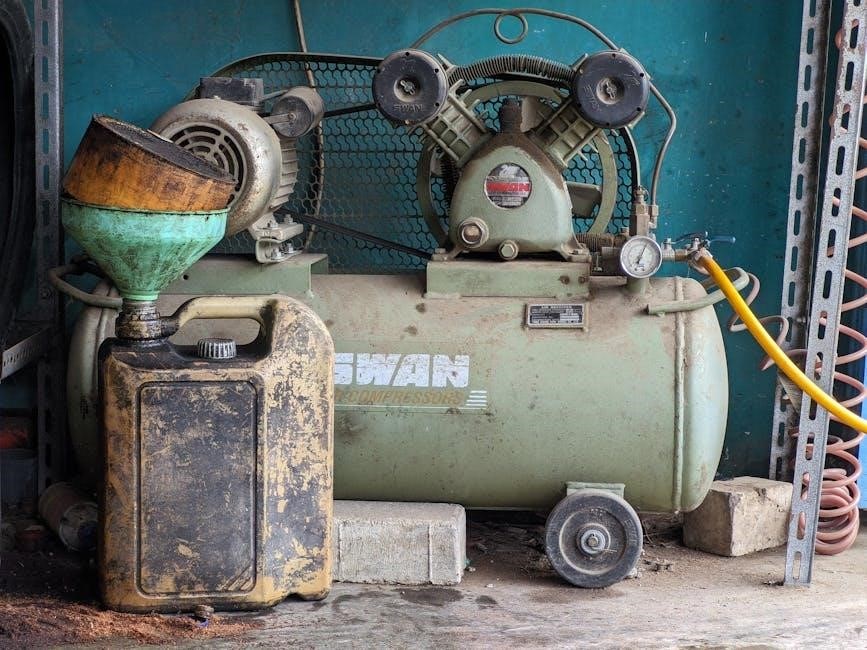
Portable Compressor Division Fault Codes
Ingersoll Rand’s Portable Compressor Division employs a comprehensive system of diagnostic trouble codes (DTCs) to pinpoint issues within their mobile compressor range. These fault codes, extensively documented in PDF format operating and maintenance manuals, cover a broad spectrum of potential problems, from sensor malfunctions and oil level discrepancies to more serious engine and motor failures.
Accessing the correct PDF manual, specific to the compressor model, is paramount. The manuals detail each fault code, providing a clear description of the issue, probable causes, and recommended troubleshooting steps. Common codes relate to high discharge temperatures, overload conditions, and low oil pressure. The SECU display is the primary interface for reading these codes, allowing technicians to quickly identify and address compressor malfunctions, minimizing downtime and ensuring optimal performance. Referencing the official Ingersoll Rand documentation is always recommended.
Isuzu Engine Fault Codes
Ingersoll Rand compressors frequently utilize Isuzu diesel engines as their power source. Consequently, a dedicated set of fault codes pertains specifically to the Isuzu engine’s operation, detailed within comprehensive PDF manuals. These codes, distinct from the compressor-specific DTCs, address engine-related issues such as fuel injection problems, sensor failures, and coolant temperature irregularities.
Locating the correct Isuzu engine fault code list within the Ingersoll Rand compressor’s PDF documentation is crucial for accurate diagnosis. The manuals provide detailed explanations of each code, outlining potential causes and recommended corrective actions. Common Isuzu engine fault codes relate to low oil pressure, overspeed conditions, and communication errors. Proper interpretation of these codes, alongside the compressor’s own DTCs, enables technicians to efficiently resolve engine-related performance issues and maintain optimal compressor functionality.
Turbec, Capstone Compressor Fault Codes
Ingersoll Rand’s Turbec and Capstone compressor lines, known for their cogeneration capabilities, possess unique fault code systems detailed in specialized PDF documentation. These codes differ significantly from standard Ingersoll Rand compressor DTCs, reflecting the complex operation of microturbines ranging from 30 to 350 kW. The PDF manuals provide specific diagnostic information for these units.
Troubleshooting Turbec and Capstone compressors requires referencing the dedicated fault code list within their respective PDF guides. Common issues indicated by these codes involve turbine over-temperature, fuel control malfunctions, and generator synchronization problems. Understanding these specific codes, alongside adherence to approved parts lists, is vital for maintaining the efficiency and reliability of these cogeneration systems. Ignoring these specialized codes can lead to improper repairs and reduced performance.